Businesses today need to keep up with a constantly changing environment. Customer preferences can shift, market conditions can change, and new opportunities can emerge faster than ever. With so much happening at once, simply having access to data is no longer enough. Businesses need to turn that data into meaningful insights while it is still relevant.
The faster teams can understand what is happening, the faster they can respond and make informed decisions. This is why the ability to turn data into insights quickly has become increasingly important for modern businesses.
From Data to Faster Decisions
Every day, businesses generate data from almost every part of their operations. Sales transactions, customer interactions, marketing campaigns, financial activities, and day-to-day operations all contribute to a growing pool of information.
But having all this data does not necessarily mean having the answers businesses need.
For example, a sales team may have access to its latest sales data but still need to wait for a report to find out which products are underperforming. A marketing team may have campaign results available but need further analysis to understand which customer segments are responding best. Meanwhile, business leaders may have important questions but do not have the right information readily available to answer them.
This is where the gap between data and decision-making can become a challenge.
When insights take too long to reach the people who need them, opportunities can be missed and issues may take longer to address. On the other hand, when teams can quickly find and understand the information they need, they can respond to changes, explore opportunities, and make decisions with greater confidence.
In other words, the value of data is not just about how much information a business has. It is also about how quickly that information can become useful for decision-making.
The Challenge of Turning Data Into Insights
Having more data does not always make it easier to get the insights a business needs.
Data is often spread across different systems and sources, making it difficult to get a complete picture of what is happening. Business teams may also rely on data or IT teams to prepare reports, answer specific questions, or perform additional analysis.
Traditional reporting can add another layer of complexity. Predefined dashboards and reports work well for tracking regular metrics, but they may not always answer the questions that come up during day-to-day decision-making.
For example, a business user might start with a simple question:
“Why did our sales decrease this month?”
Answering that question can quickly lead to more questions:
- Which products saw the biggest decline?
- Which regions were most affected?
- Did customer behavior change?
- Was the decline related to a promotion or seasonal trend?
- How does this compare with the previous month?
If every new question requires a new report or a separate analysis request, getting to the answer can take time. By the time the insight is available, the business situation may have already changed.
This is why the challenge is not simply about having more data. Businesses also need to make that data easier to access, explore, and turn into useful insights.
From Self-Service Analytics to AI-Assisted Insight
Self-Services Analytics
So, how can businesses make it easier for teams to get the information they need without adding more work to already busy data and IT teams?
One approach is self-service analytics.
With self-service analytics, business users can explore available data and answer their own questions without having to rely on data teams for every request. Instead of simply looking at predefined dashboards, they can explore the data based on what they need to understand at the moment.
This can make the journey from a business question to a useful insight much more direct. However, self-service does not mean giving everyone access to everything. Data and IT teams still play an important role in managing data sources, access permissions, security, data quality, and governance behind the scenes.
The goal is to give business users more flexibility to explore data while keeping the right controls in place to ensure that information remains secure, reliable, and properly managed.
AI Assisted
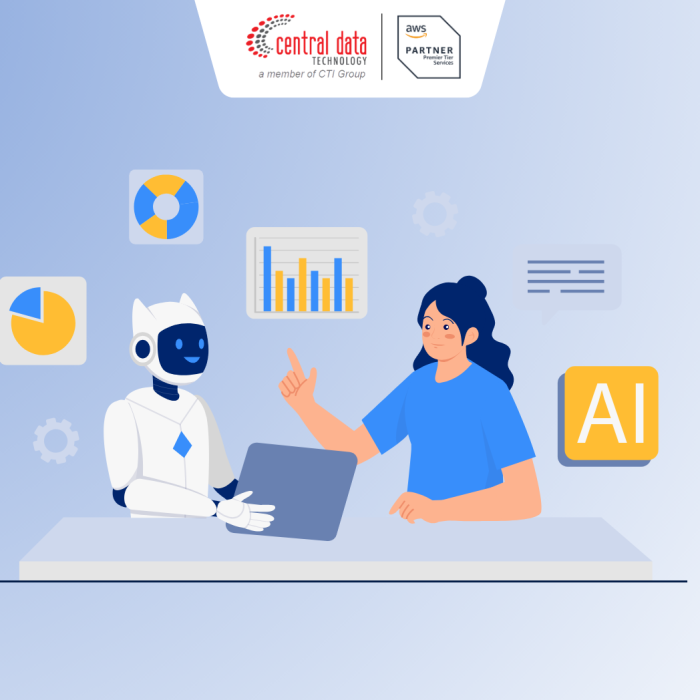
As self-service analytics evolves, AI can make this experience even more accessible. Rather than requiring users to understand how data is structured or which report they need to open, AI can help them interact with data using more natural language.
For example, instead of manually navigating through multiple dashboards, a user could simply ask:
“What were our top-performing products last quarter?”
They could then follow up with:
“How did their performance compare with the previous quarter?”
This type of interaction makes data exploration more conversational and allows users to investigate questions as they come up. AI can also help summarize information, identify trends, and highlight patterns that may be worth exploring further.
The journey from data to decision can therefore become more direct:
Question → Data Exploration → Insight → Decision
This can be useful across different teams. Sales teams can explore performance, marketing teams can investigate campaign results, and business leaders can look for trends across different areas of the organization.
The goal is not to replace human decision-making. Instead, self-service analytics and AI can reduce the effort needed to find and understand relevant information, giving teams more time to interpret insights and decide what to do next.
Ultimately, the combination can help make data a more accessible and useful part of everyday decision-making, while data and IT teams continue to maintain the security, reliability, and governance of the underlying data environment.
Where Amazon Quick Fits In
As businesses look for ways to make data exploration faster and more accessible, AI-powered analytics can help bridge the gap between business questions and actionable insights.
Amazon Quick is designed to support this approach by helping users interact with business data in a more natural way and making it easier to explore information, ask questions, and uncover relevant insights.
Rather than relying only on predefined reports, users can take a more flexible approach to exploring data based on what they need to understand. This can help shorten the journey from question to insight, making data more accessible for everyday decision-making.
With the right tools in place, businesses can move beyond simply looking at data toward interacting with data to find the answers they need.
Unlock Faster Data Insights with CDT!
Turning data into timely insights requires more than simply collecting information. Businesses need the right technology and expertise to make data easier to explore and turn into insights that support everyday decisions.
As an AWS Premier Tier Services Partner in Indonesia, Central Data Technology (CDT) helps businesses explore and implement data and AI solutions powered by AWS. From identifying the right use cases to developing solutions that align with business needs, CDT can help businesses get more value from their data.
Ready to unlock faster and more actionable insights from your data? Contact the CDT team through this link and discuss your data and AI needs with us.