The development of artificial intelligence (AI) over the past few years has changed the way people interact with technology. While AI has traditionally been used to identify patterns, perform classification, and make predictions, it has now evolved to a point where it can also generate new content.
This is where Generative AI (GenAI) comes in.
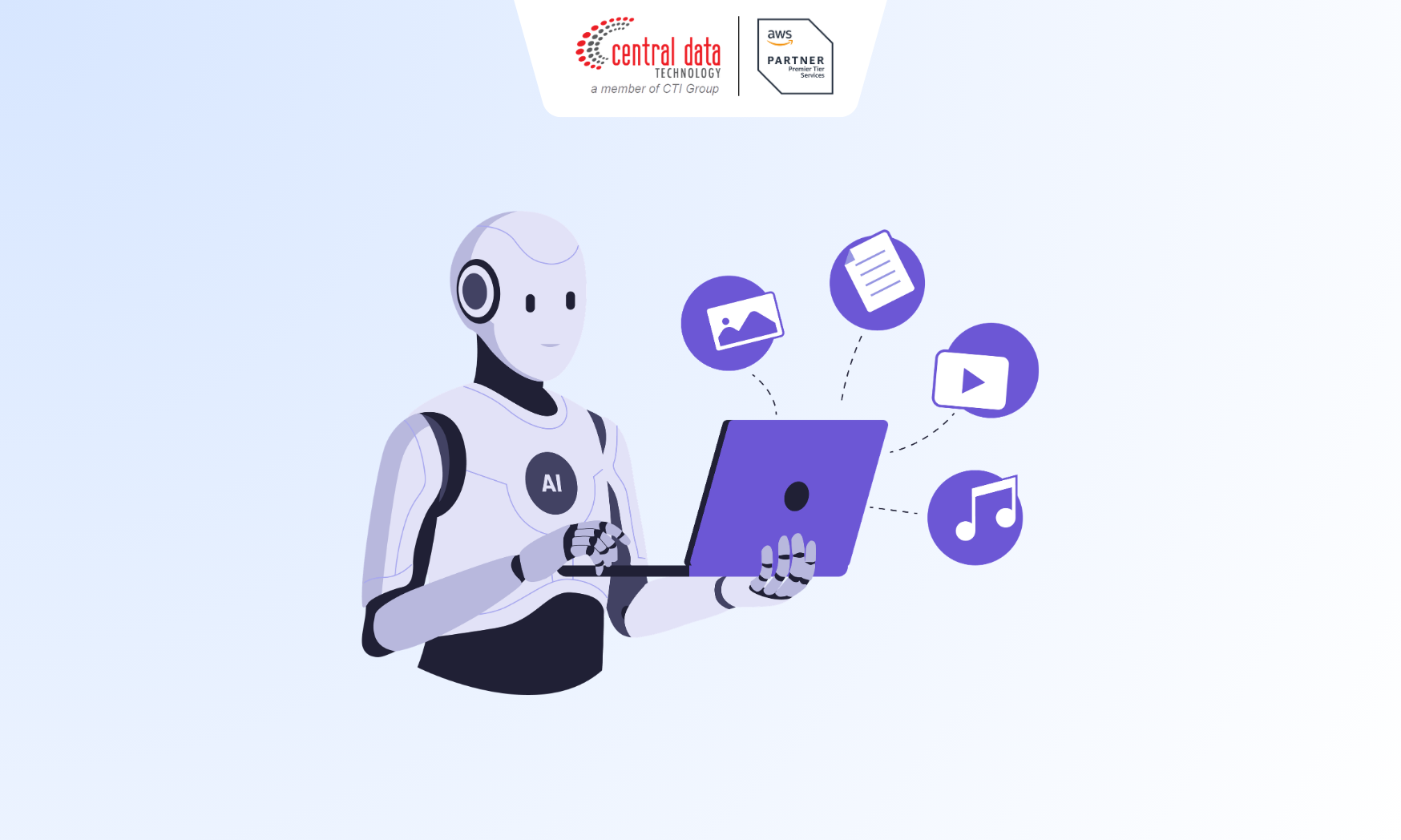
GenAI can generate various types of content, including text, images, audio, video, and code, based on patterns learned from data. This capability is allowing GenAI to play a growing role in the way businesses work, from supporting everyday tasks to improving customer interactions.
From Traditional AI to Generative AI
AI has long been used to identify patterns, perform classification, and make predictions. However, Generative AI brings a different capability to the table. While traditional AI is often used to understand and analyze information, GenAI can use what it has learned to generate new output.
These outputs can range from text, images, audio, and video to programming code. Users can also interact with AI through prompts using natural language, making it easier to communicate with AI without necessarily understanding the technical processes behind the model. This capability is what allows GenAI to be used across a growing range of business activities, from processing information and creating content to supporting communication with customers.
How Is Generative AI Used in Business?
Accelerating Access to Information
Businesses store large amounts of information in various forms, from documents and reports to knowledge bases. As the amount of information grows, finding the right information when it is needed can become increasingly challenging.
GenAI can simplify this process by allowing users to search, summarize, and understand information through natural-language questions, without having to manually go through multiple documents. This allows employees to spend less time looking for information and more time on analysis and decision-making.
Improving Productivity
Beyond helping employees find information, GenAI can also support a wide range of everyday tasks. From drafting emails and documents to summarizing reports, creating content, and providing coding suggestions, AI can help streamline tasks that previously required significant time and effort.
Improving Customer Experience
The way businesses interact with customers is also beginning to change. AI-powered chatbots and virtual assistants are increasingly being used to answer customer questions using more natural language.
The use of GenAI goes beyond direct customer interactions. It can also support customer service agents throughout the service process, such as by summarizing conversations or helping them find relevant information. Agents can work with more complete information, while customers can receive faster responses that are better aligned with their needs.
Supporting Software Development
In software development, GenAI can help developers write, explain, and improve code, making the application development process more efficient. However, AI-generated output still needs to be reviewed by developers to ensure its quality, security, and alignment with application requirements.
Ultimately, the role of GenAI is not to take over all human work, but to help people work more efficiently while giving them more room to apply their expertise and judgment when making decisions.
Challenges of Adopting Generative AI
GenAI offers significant potential, but bringing it into a business environment requires the right approach and technology foundation. Every company has different needs, data, and business processes, so GenAI implementation needs to be tailored to its specific context.
Key considerations include security, privacy, and governance, particularly as GenAI becomes connected to business data and systems. Selecting the right model and managing data effectively are also important to ensure that the solutions being built can deliver relevant results for business needs.
For this reason, implementing GenAI is not simply about choosing an AI model. Businesses also need the right data, security, integration, and infrastructure to support AI solutions and allow them to scale as business needs evolve.
Building Generative AI Solutions with Amazon Bedrock
Turning Generative AI into a business solution requires access to capable AI models and a technology foundation that can support real-world applications. Amazon Bedrock helps businesses build Generative AI applications by providing access to foundation models through APIs, without requiring them to manage the underlying model infrastructure.
With Bedrock, businesses can develop solutions such as AI-powered chatbots, content generation, summarization, information retrieval, and integrate them with their existing applications and data.
This makes Amazon Bedrock a practical starting point for businesses looking to explore and implement Generative AI based on their specific needs.
Unlock the Potential of Generative AI with CDT!
Generative AI opens new opportunities for businesses to improve productivity, streamline processes, and deliver better customer experiences. To turn these opportunities into practical solutions, businesses need the right technology foundation and an approach that aligns with their specific needs.
As an AWS Premier Tier Services Partner in Indonesia, Central Data Technology (CDT) helps businesses explore and develop Generative AI solutions powered by AWS. From identifying the right use cases to developing solutions that are ready for implementation, CDT can support businesses throughout their AI journey.
Ready to explore the potential of Generative AI for your business? Contact the CDT team through this link and discuss your AI needs with us.